

Dental Business Continuity Drill: 2026 Downtime Guide
Run a dental business continuity drill for PMS, imaging, phones, internet, backups, emergency access, vendors, patient workflow, and recovery decisions.
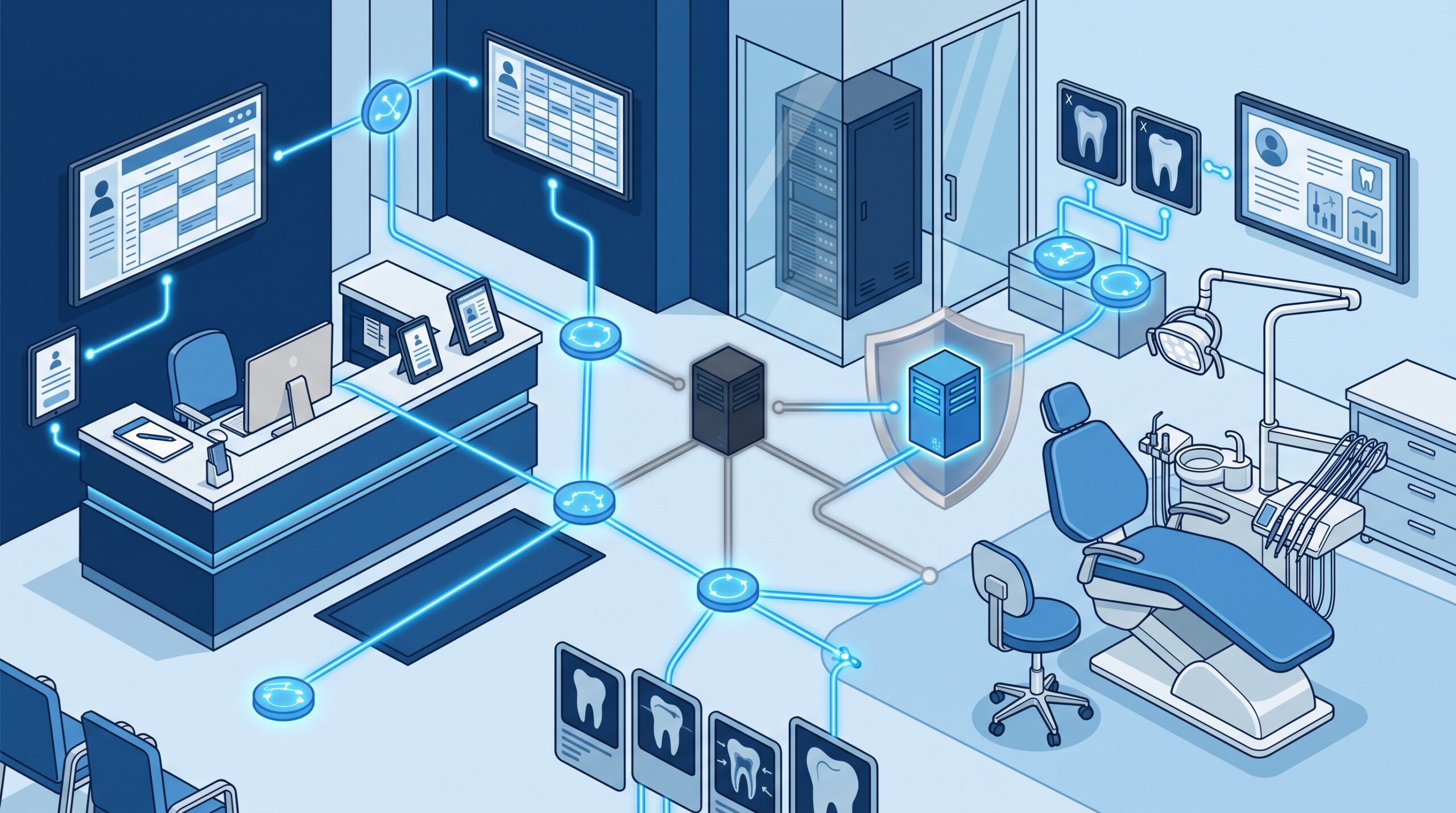
Dental practices depend on a tightly connected technology stack: practice-management software, imaging, internet, phones, authentication, backups, payment systems, and vendor support. HHS's current HIPAA Security Rule requires contingency planning for emergencies that damage information systems containing ePHI, including data backup, disaster recovery, and emergency-mode operations. OCR's audit protocol also asks for evidence that restore procedures are tested and results are documented. A business continuity drill turns those written plans into an operational exercise by asking the team to walk through a realistic outage, identify who makes each decision, and verify that recovery resources can actually be reached.
Key Takeaways
Test the decisions in the plan, not just whether the document exists: who declares downtime, who contacts vendors, who can reach emergency credentials, and what systems must return first.
Use realistic scenarios such as a server outage, internet failure, ransomware alert, inaccessible cloud system, or building closure and document gaps discovered during the exercise.
A continuity drill does not replace backup restore testing. It complements technical recovery tests by validating people, communications, priorities, access, and business workflow.
What is a dental business continuity drill?
A business continuity drill is a structured exercise that walks the practice through a realistic disruption without intentionally taking production systems offline. The facilitator presents a scenario, such as a failed server, unavailable practice-management platform, extended internet outage, or suspected ransomware event, and the team explains what it would do next.
The goal is not to grade people on perfect answers. It is to find hidden dependencies while the office is calm: missing vendor contacts, credentials owned by a former employee, confusion about who can authorize emergency changes, downtime forms nobody can locate, or recovery priorities that have never been agreed upon.
Which scenario should a dental practice test first?
Start with a scenario that would materially interrupt patient care and requires multiple teams to coordinate. A server or PMS outage is often useful because it touches scheduling, chart access, imaging links, claims, payments, phones, and vendor support. A ransomware scenario is valuable when the practice wants to test containment and leadership communication rather than ordinary break-fix troubleshooting.
Keep the first exercise narrow enough to finish. One scenario with several decision points usually teaches more than a complicated simulation that tries to cover every disaster at once.
Who should participate in the drill?
Include the practice owner or administrator, the person who can make operational decisions, a clinical representative, front-desk leadership, the IT provider, and any other role that owns a critical dependency. Depending on the scenario, that may include the PMS vendor, imaging vendor, internet provider, building management, or security contact.
The drill should make ownership visible. If everyone assumes somebody else has the emergency credential, vendor account, recovery approval, or patient-communication responsibility, that ambiguity is itself a finding.
What should the team verify during the exercise?
Verify that current contact information exists, emergency access can be obtained, the asset and vendor inventory is usable, downtime procedures can be found, backup and recovery responsibilities are understood, and the team knows which systems are most critical to restore first.
Also test communication. Decide how staff are told that systems are unavailable, how patients are handled, who communicates with vendors, and who records incident decisions. The practice should not discover during an outage that its only contact list is stored inside the unavailable system.
How should HIPAA contingency planning influence the drill?
HHS requires regulated entities to plan for backup, disaster recovery, and emergency-mode operations that protect ePHI during emergencies. The rule remains risk-based and does not prescribe one universal tabletop frequency or a specific drill format for every dental office.
Use the exercise to test whether the practice can continue critical processes while protecting ePHI, whether emergency access is limited to appropriate personnel, and whether recovery steps preserve confidentiality, integrity, and availability instead of creating unsafe shortcuts under pressure.
What happens after the drill?
Document the scenario, participants, decisions, gaps, assigned corrective actions, and target dates. Prioritize findings that could prevent recovery or create security exposure, such as inaccessible backups, unknown administrator ownership, stale vendor access, missing network documentation, or no defined escalation path.
Then retest the corrected areas. A drill creates value when findings change the environment or the plan, not when the exercise ends with a meeting note that nobody revisits.
Sources and References
Primary sources used for this article
Regulations, product support information, and incident details can change. Review the linked primary sources for the latest status.
Current Security Rule summary covering contingency planning, backup, disaster recovery, emergency-mode operations, policies, and documentation.
OCR audit criteria addressing emergency-mode operations, restore testing, documentation, and corrective actions.
Risk-management framework connecting governance, protection, detection, response, recovery, and plan improvement.
Common Questions
Frequently asked questions
Does HIPAA require a specific annual tabletop exercise?
The current Security Rule requires contingency planning and includes testing and revision procedures as an addressable implementation specification, but it does not prescribe one universal annual tabletop format for every dental practice. The practice should use a documented risk-based testing approach.
Is a continuity drill the same as a backup restore test?
No. A restore test proves technical recovery of data or systems. A continuity drill tests people, access, priorities, communications, vendor coordination, downtime workflow, and decision-making. Mature planning uses both.
How long should a first dental continuity drill take?
There is no mandated duration. A focused tabletop can be kept short enough to fit practice leadership schedules as long as it reaches meaningful decision points and produces documented corrective actions.
Should the IT provider run the entire exercise?
IT should participate, but business leadership should own operational decisions. The exercise should reveal where clinical, administrative, vendor, and technical responsibilities intersect.
What is the most important output from the exercise?
A prioritized correction list with owners and dates. The drill is successful when it exposes assumptions early and leads to improvements in documentation, access, backups, escalation, and workflow.
Can a practice run the drill without shutting systems down?
Yes. A tabletop exercise can simulate the outage verbally or from a written scenario. Technical recovery tests can be scheduled separately in controlled environments.