


Local SEO for Dentists in South Florida: How to Get Found by Nearby Patients
Learn how local SEO helps dentists in South Florida improve visibility for nearby patients through Google Business Profile optimization, service pages, reviews, technical SEO, and helpful content.
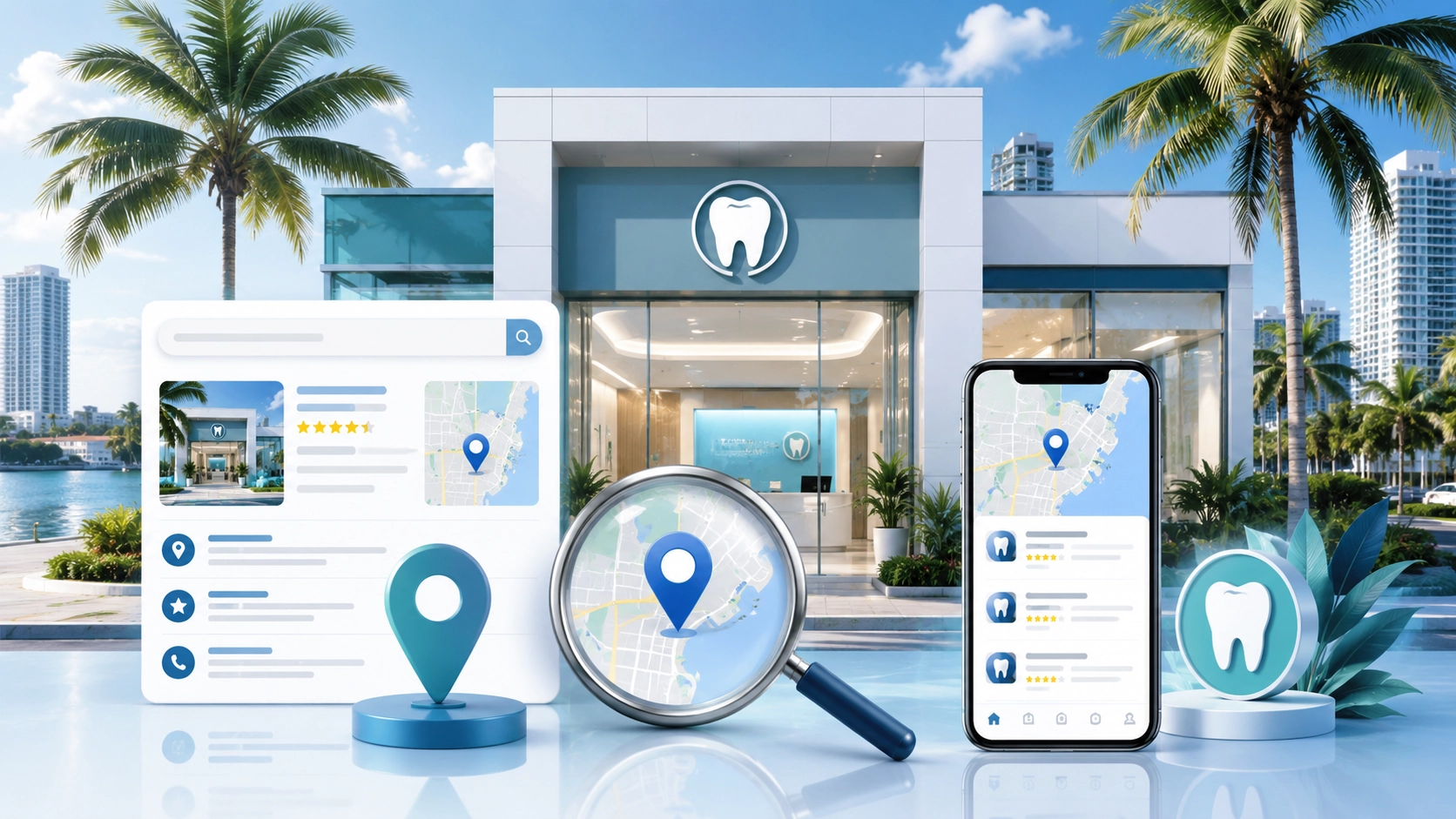
Local SEO helps dental practices appear when nearby patients are searching for care. For dentists in South Florida, visibility depends on more than having a website. Your Google Business Profile, service pages, reviews, local signals, technical SEO, and helpful content all work together to help patients discover and trust your practice.
Key Takeaways
Local SEO helps dental practices show up when nearby patients search for specific services, locations, and treatment needs.
Google Business Profile optimization, reviews, service pages, and technical SEO all support stronger local visibility.
Blog content works best when it answers real patient questions and connects naturally to services and locations.
Why local SEO matters for dentists
Most dental patients search locally. They look for services near their home, workplace, school, or neighborhood. Local SEO helps your practice appear when those nearby patients are actively searching.
For South Florida dentists, local SEO should reflect the actual communities you serve, such as Miami, Doral, Aventura, Fort Lauderdale, Hollywood, Boca Raton, West Palm Beach, and the Florida Keys.
A strong local SEO strategy helps patients understand where your office is located, what services you provide, what makes your practice different, and how to contact you.
Local SEO is not only about rankings. It also supports trust. When patients see clear service pages, helpful content, real reviews, accurate business information, and a modern website, they are more likely to take the next step.
Start with your Google Business Profile
Your Google Business Profile should have accurate contact information, categories, business hours, services, photos, and appointment links. It should also be kept up to date when your office hours, services, or locations change.
Reviews also support local trust. A steady review process can help patients understand your experience, communication style, and service quality before they call.
Your profile should match your website. Practice name, address, phone number, service descriptions, and appointment links should be consistent so patients and search engines receive the same information.
Photos can also help patients feel familiar with your practice before visiting. Exterior photos, interior photos, team photos, technology photos, and treatment room photos can all support confidence.
Build strong service pages
A dental website should have clear pages for important services and technologies. These pages help patients and search engines understand what the practice offers.
For example, a practice may need dedicated pages for emergency dentistry, implants, Invisalign, cosmetic dentistry, hygiene, pediatric dentistry, or sleep apnea treatment, depending on the services provided.
Each service page should explain who the service is for, what patients can expect, why the service matters, and how to schedule an appointment.
Service pages should also include internal links to related services, FAQs, local context, images, calls to action, and clear next steps for patients who are ready to contact the office.
Create helpful local content
Blog content can support SEO when it answers real patient questions, explains treatment options, and connects services to local needs. Content should be written for people first, not just for keywords.
A strong dental blog can cover topics like what to expect at a first visit, how to choose a dentist in a specific city, insurance questions, emergency dental steps, and technology used in modern practices.
Local content should be specific enough to be useful. Instead of writing generic posts that could apply anywhere, connect your content to the services, communities, and patient concerns your practice actually serves.
The best blog posts support the rest of the website. They can internally link to service pages, city pages, contact pages, and related educational articles to create a stronger SEO structure.
Technical SEO still matters
Search engines need to crawl and understand your website. Clean URLs, fast loading pages, internal links, title tags, meta descriptions, image alt text, and structured data all support a stronger SEO foundation.
A dental website should also work well on mobile devices because many patients search from their phones before calling or requesting an appointment.
Technical SEO also affects user experience. If a website loads slowly, has broken links, uses unclear navigation, or makes contact information hard to find, patients may leave before scheduling.
For dental practices, technical SEO should support real business goals: more qualified calls, appointment requests, service awareness, and trust from patients searching in your area.
Common Questions
Frequently asked questions
What is local SEO for dentists?
Local SEO for dentists is the process of improving a dental practice’s visibility when nearby patients search for dental services online.
Does a dental practice need blog content for SEO?
Blog content can help when it answers real patient questions, supports service pages, and builds topical authority around the services and locations the practice serves.
What matters most for dental local SEO?
Important local SEO factors include Google Business Profile optimization, accurate business information, reviews, strong service pages, technical SEO, helpful content, and local relevance.